top of page
Elizabeth Palmer
Artefacts of a Rebellion
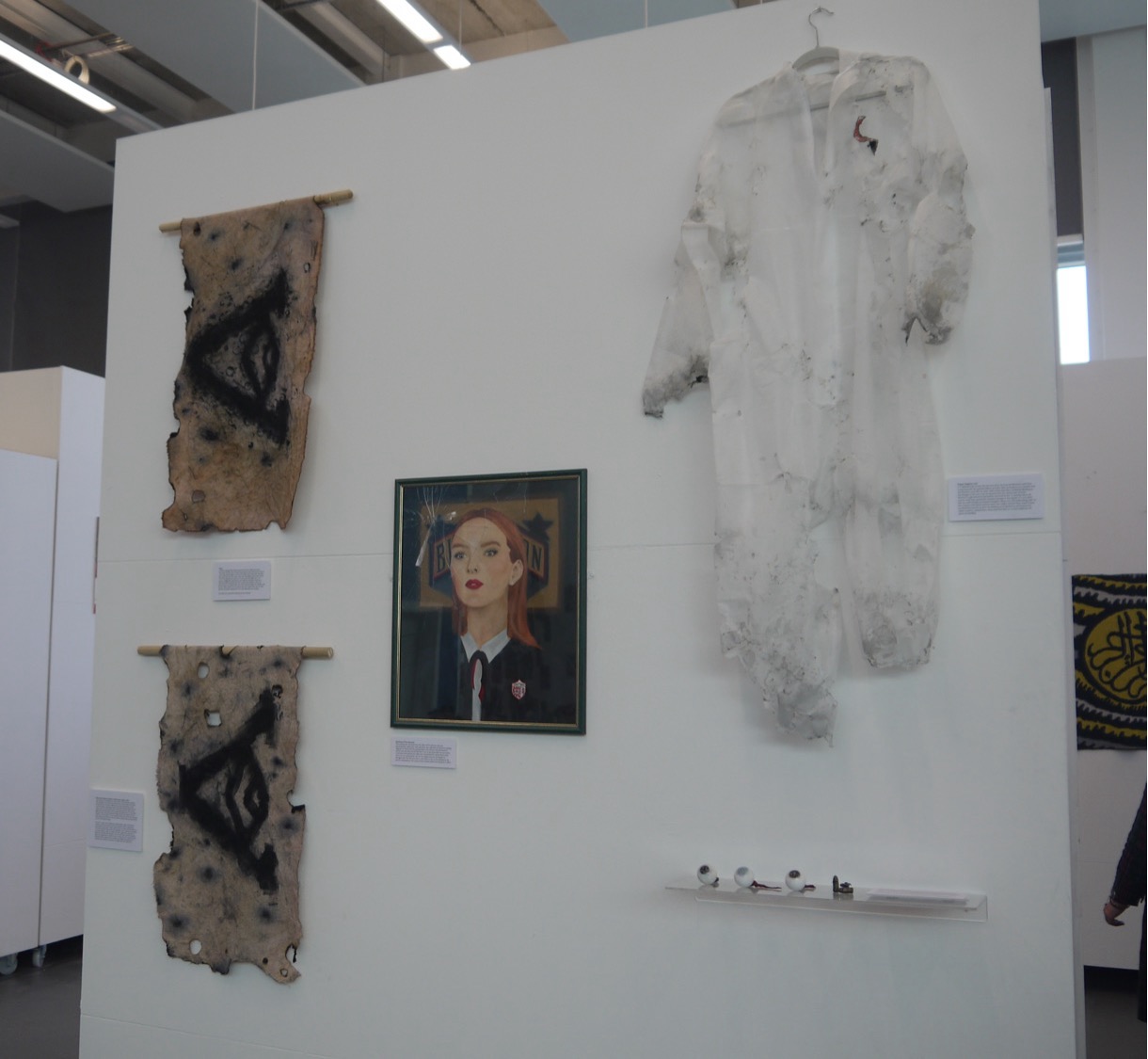
Born from an obsession with apocalypse, this installation tells a dystopic story, displayed as preserved historical artefacts. Displayed as part of the final year degree show at the University of Huddersfield. The accompanying audio details the timeline of events throughout the narrative.
Project Type
Installation
Date
June 2024
Medium
Found objects and garments, wire, oil on canvas board, ink, acrylic, ash, charcoal, fabric transfer, palettes, foam clay, wood

01
Artefacts of a Rebellion

01
Exhibition View

02
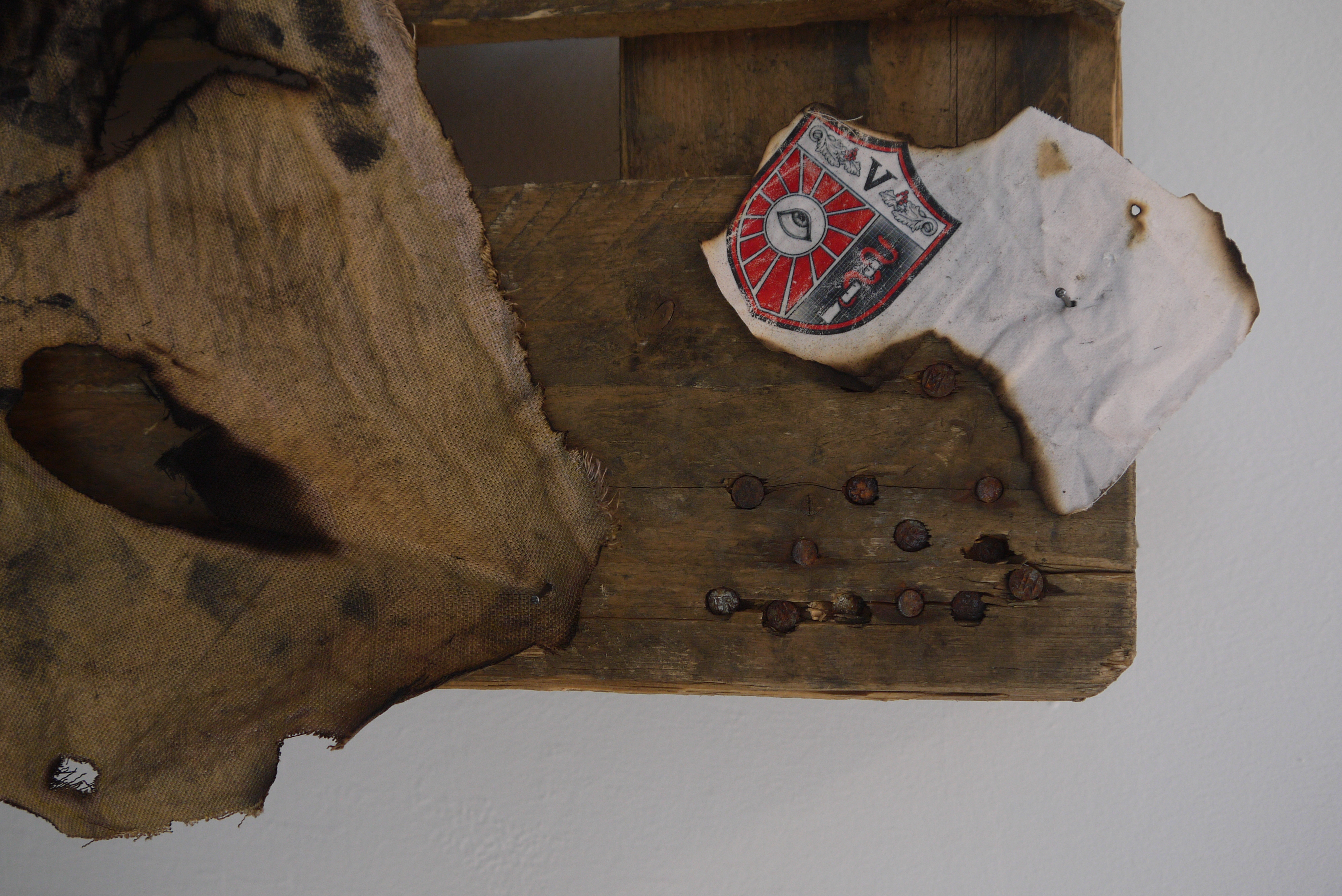
Palette, badges and flags
The badges that appear on this artefact are believed to be remnants of Biovision employee uniforms. These could have been recovered from ex-employees that joined the rebellion before the war or taken from the fallen staff of pre-war attacks. This collection of items was discovered at a rebel campsite in the impoverished part of the area surrounding the war
site, where it was believed to be a warning sign to ward off the Monitorial regiment from entering the camp. According to witness accounts, the Monitorials had brutal punishments
for rebels against the company, these effigies were a non-violent defence strategy.
site, where it was believed to be a warning sign to ward off the Monitorial regiment from entering the camp. According to witness accounts, the Monitorials had brutal punishments
for rebels against the company, these effigies were a non-violent defence strategy.

03
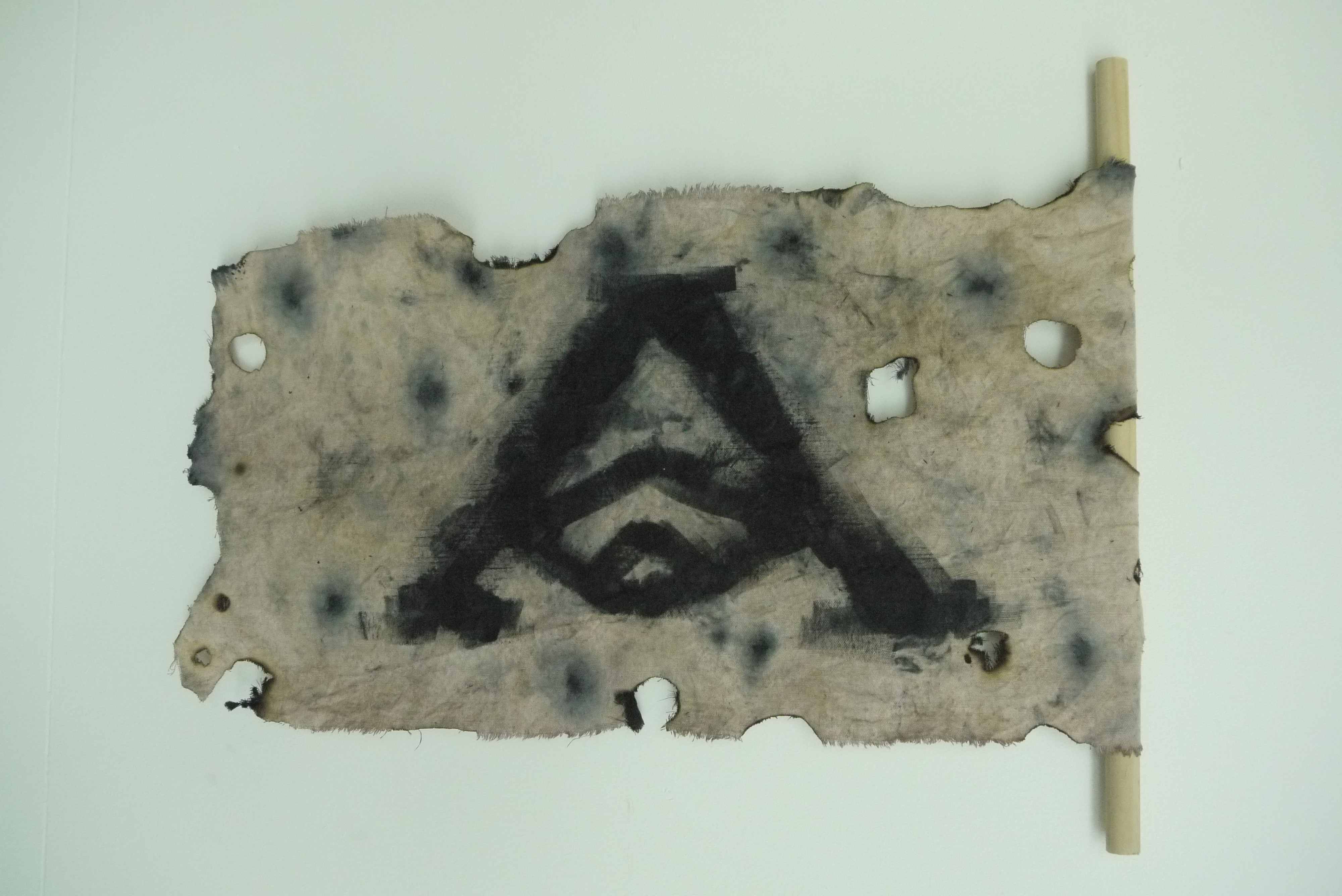
Flag
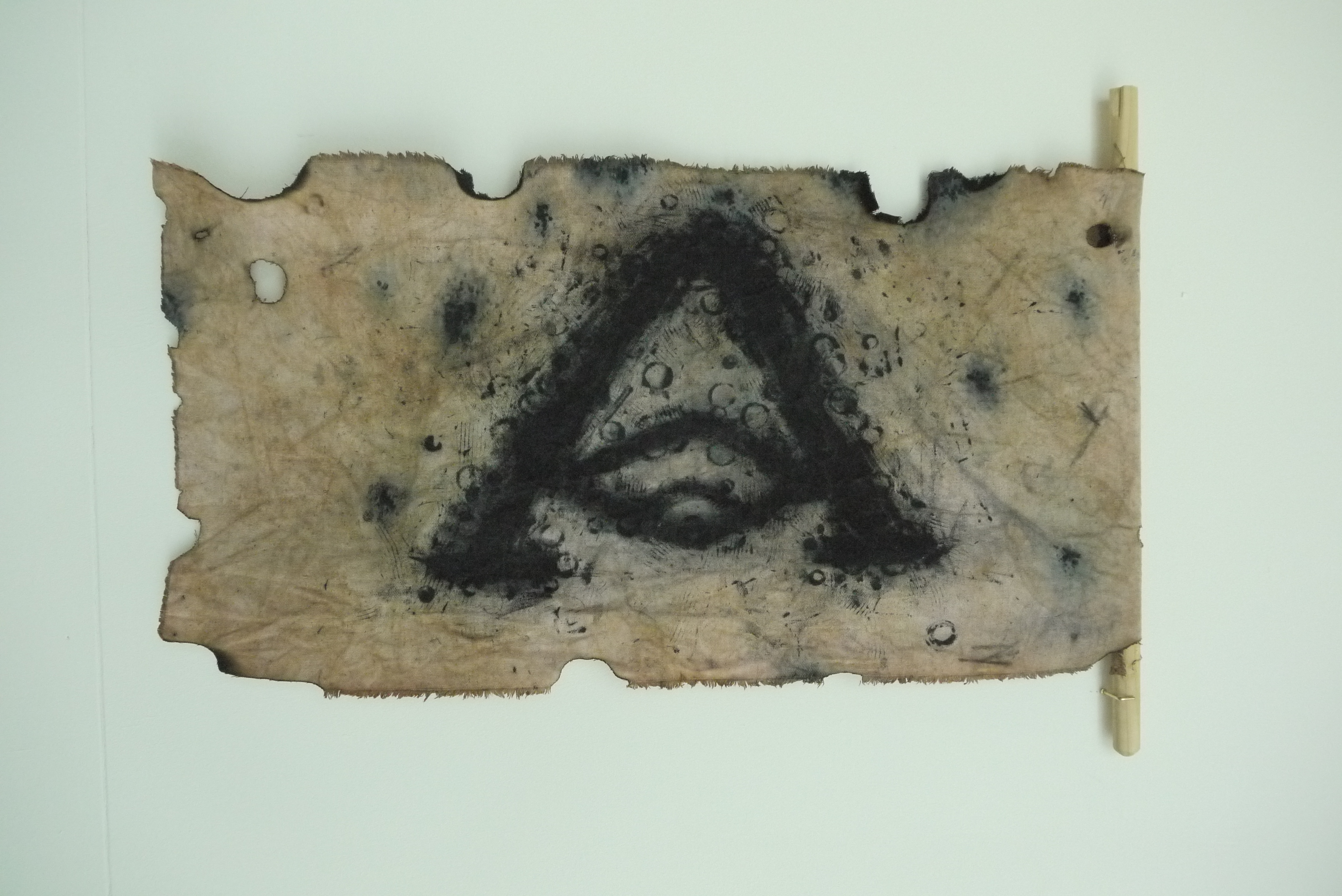
Countless damaged flag artefacts were found at the conflict site. It was discovered that they
were created using whatever means the survivors had of mark making. Some appear to have brush stokes, some were made with their bare hands, and some were even made with what
appear to be metal scratch marks. The example here made up of metal marks was made with an ex-patients mangled limb replacement they suffered at the hands of Biovision before the war. The patient, after their ordeal, found sanctuary with an ex-patient camp in an
impoverished area where they later joined the rebellion and the war efforts. Before their
procedure they were a tailor. After the war, they became a volunteer, helping those who
were affected by the company.
Courtesy of an anonymous ex-patient survivor & family

04
Flag

05
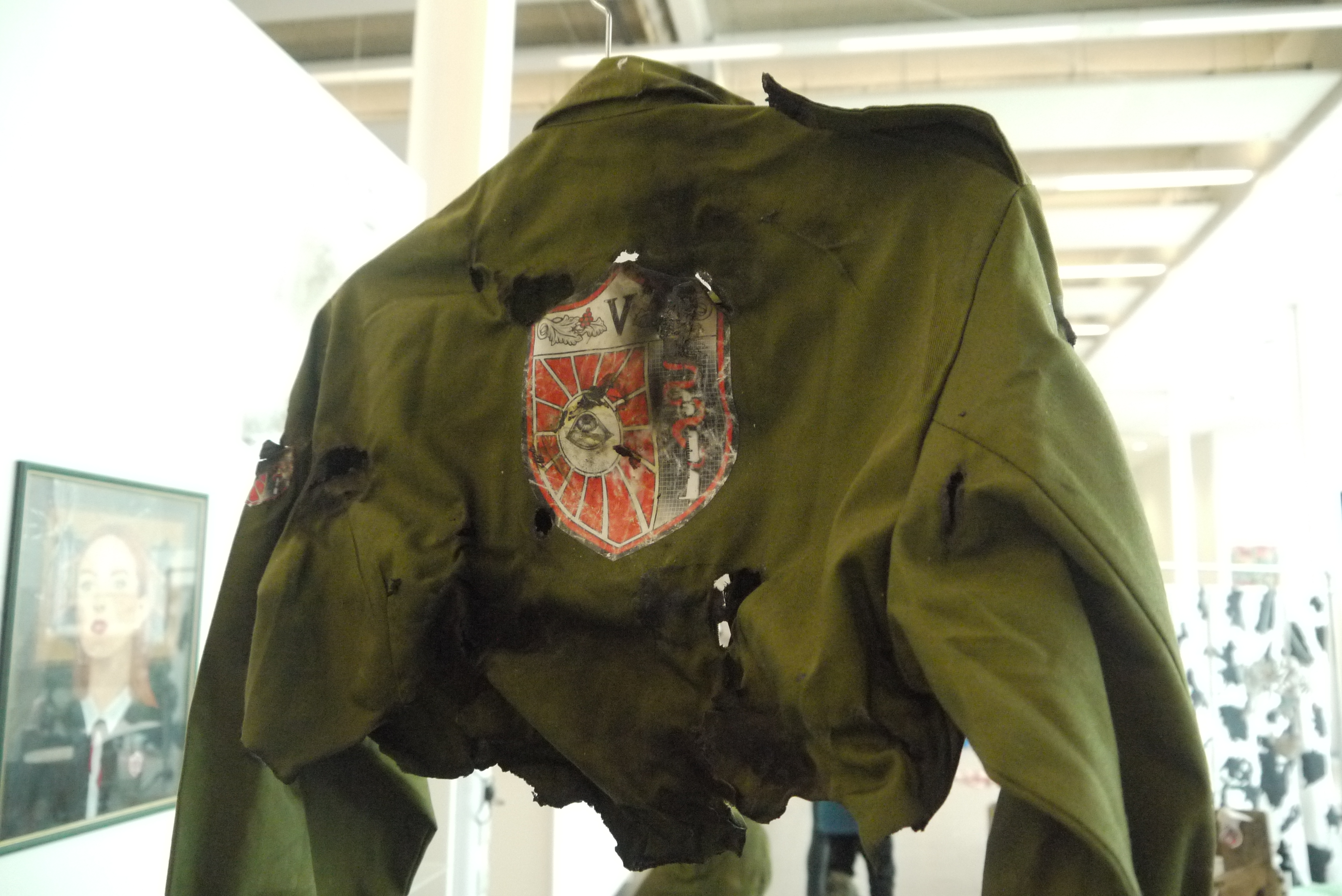
Monitorial Jacket
This item was recovered from a fallen soldier of the Monitorial regiment that was killed in the conflict between Biovision and the rebels. The wearer would have been a heavily modified human soldier that Biovision could control through a neurological implant, which unfortunately means that the wearer may not have been fully aware of the grave nature of their actions against the surviving victims of the company during that time. It is very likely that the wearer also had weaponised augmentations that operated as live artillery in the war effort. It is even possible that because of the lack of testing these weapons had before the
war, that they could have been the cause of this person’s unfortunate passing.
war, that they could have been the cause of this person’s unfortunate passing.

06
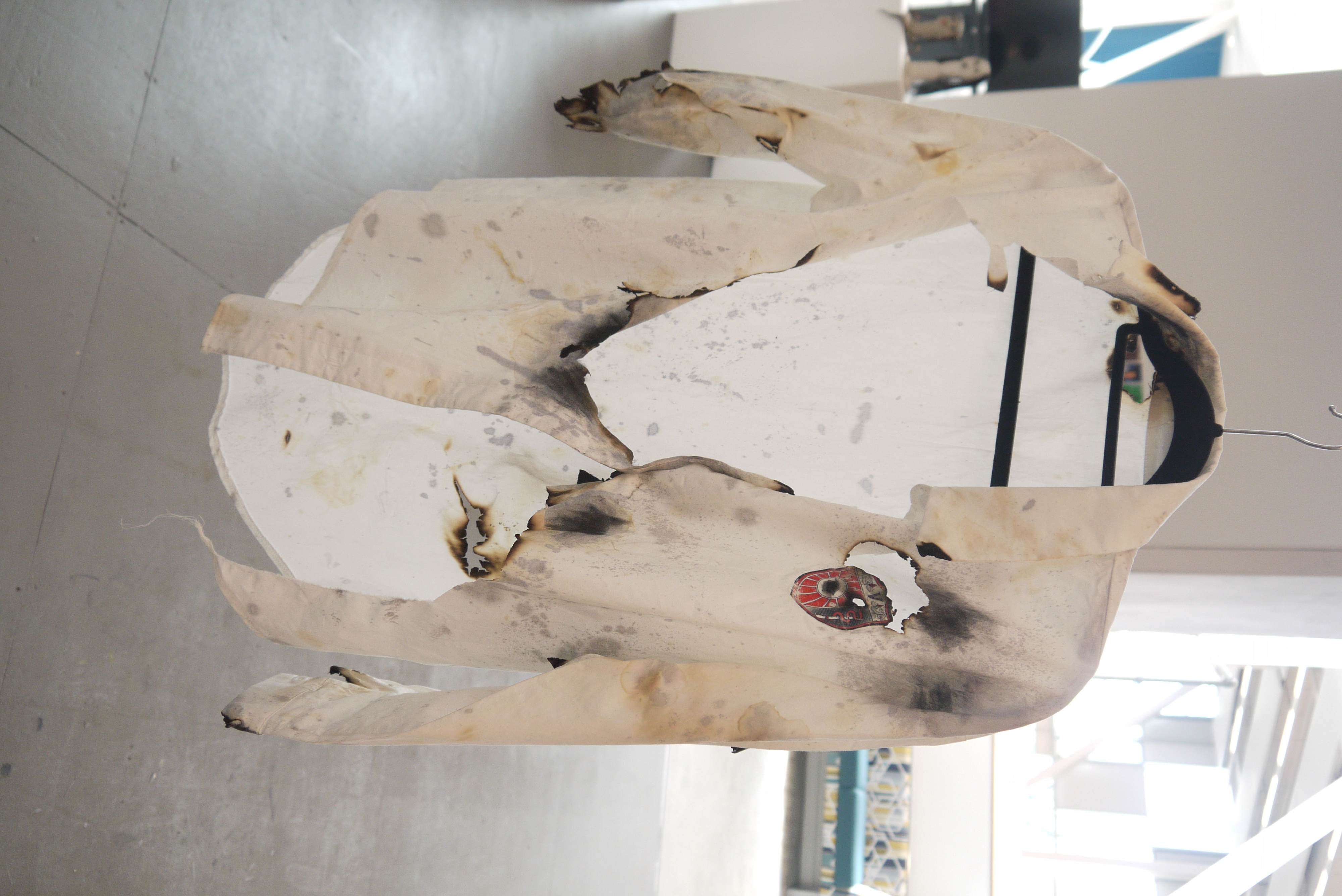
Biovision Uniform Shirt
This item is what is left of a Biovision staff member’s uniform. This type of uniform would not have been worn by the scientists of the company but more likely security staff or other
similar roles. It is marked with the Biovision crest that remained a part of this shirt, although it was common for the rebels to remove them as a sign of strength and victory against the company. It is likely that, showing by the damage to the shirt, the wearer had also received
Biovision’s augmentations, perhaps as part of their job role or even by choice. Members of the company were provided with adequate procedures, as it would’ve been of little use to them to brutalise their own work force.

07
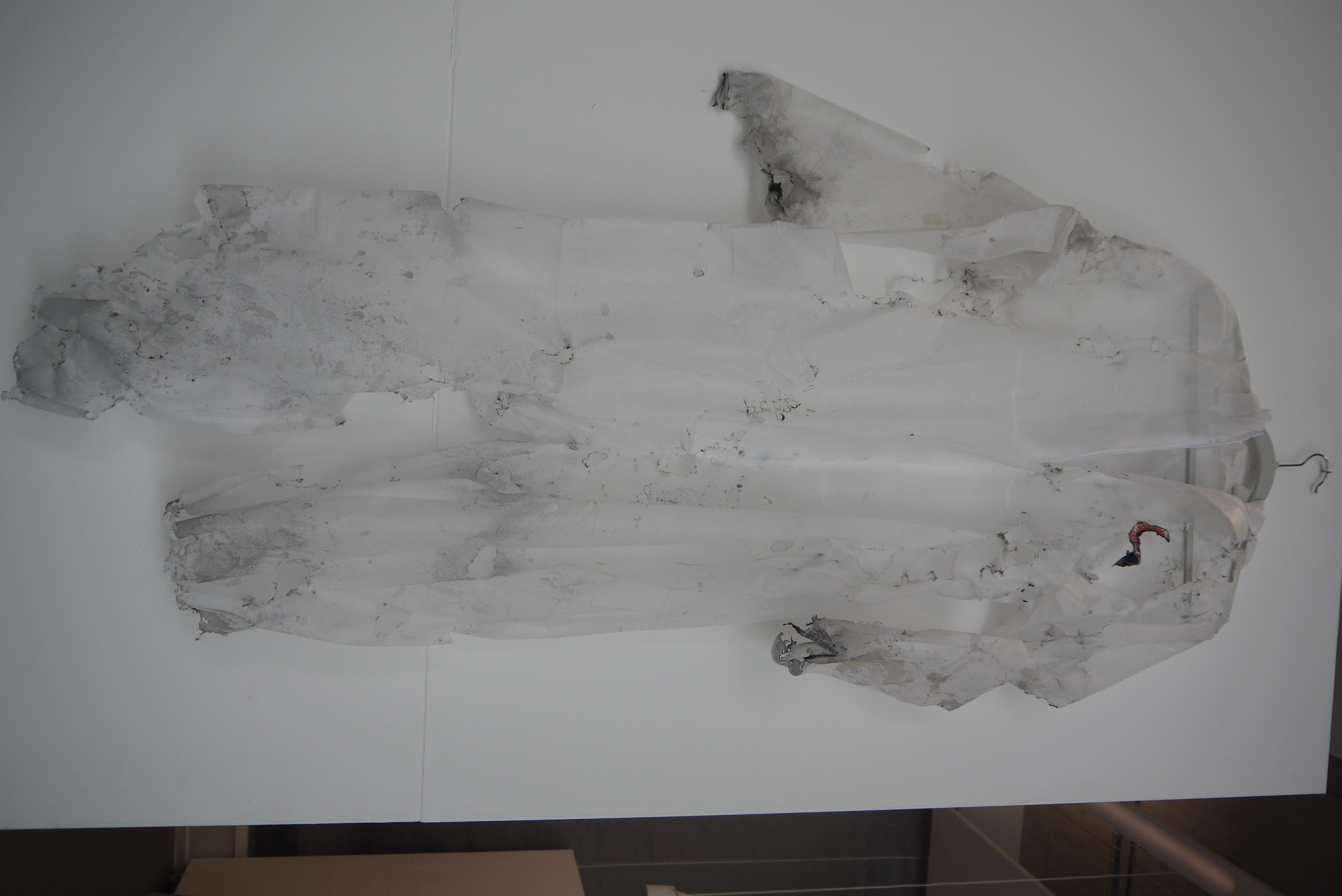
Paper Hygiene Suit
It is believed that articles like this one were worn by the Biovision staff when interacting with the patients before and after their procedures. It is marked with the Biovision crest, like all other staff articles that were recovered. Showing by the damage to the suit it can be
assumed that the wearer had received Biovision’s augmentations themselves, indicated by
the oil staining where the wearer could have potentially sustained damage in the attacks. It is
very likely that this staff member, potentially alongside others, was still undertaking tasks for
the company with future patients when the conflict started. They could’ve been working theoretically up until the building was breached, by which point the rebels would’ve reached them when they had little to no more defences left inside the building.

08
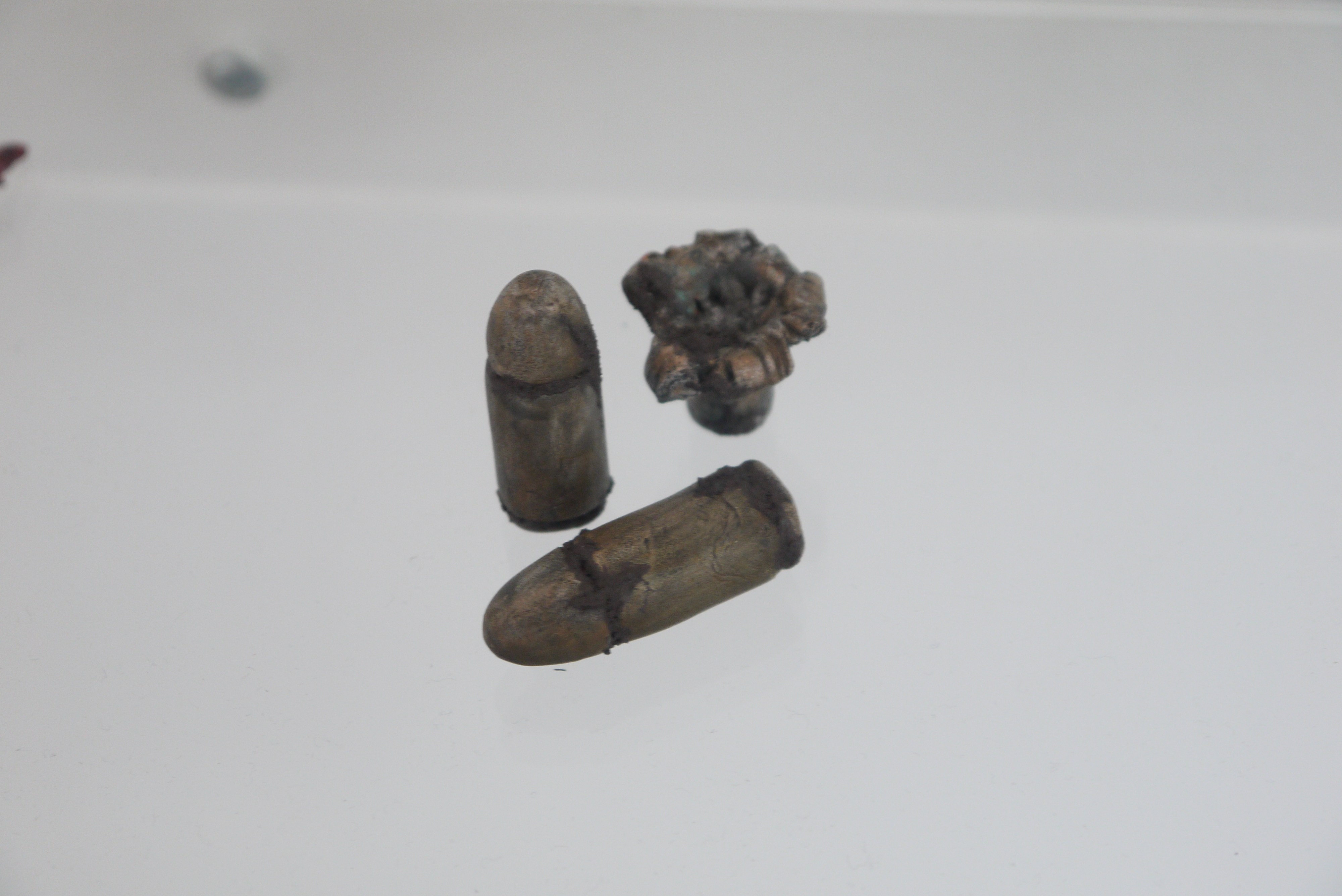
Bullets
The bullet specimens were found in and around the Biovision facility, both shot by the rebel forces and the ‘Monitorial’ regiment who were trying to hold back their advance. There are only a few well-preserved artefacts here, but there were many more littering the entire attack site. Many eyewitness accounts reported seeing these bullets shot from people’s arm replacements on both sides of the war.

09
Augmented eye

10
Augmented eye

11
Augmented eye
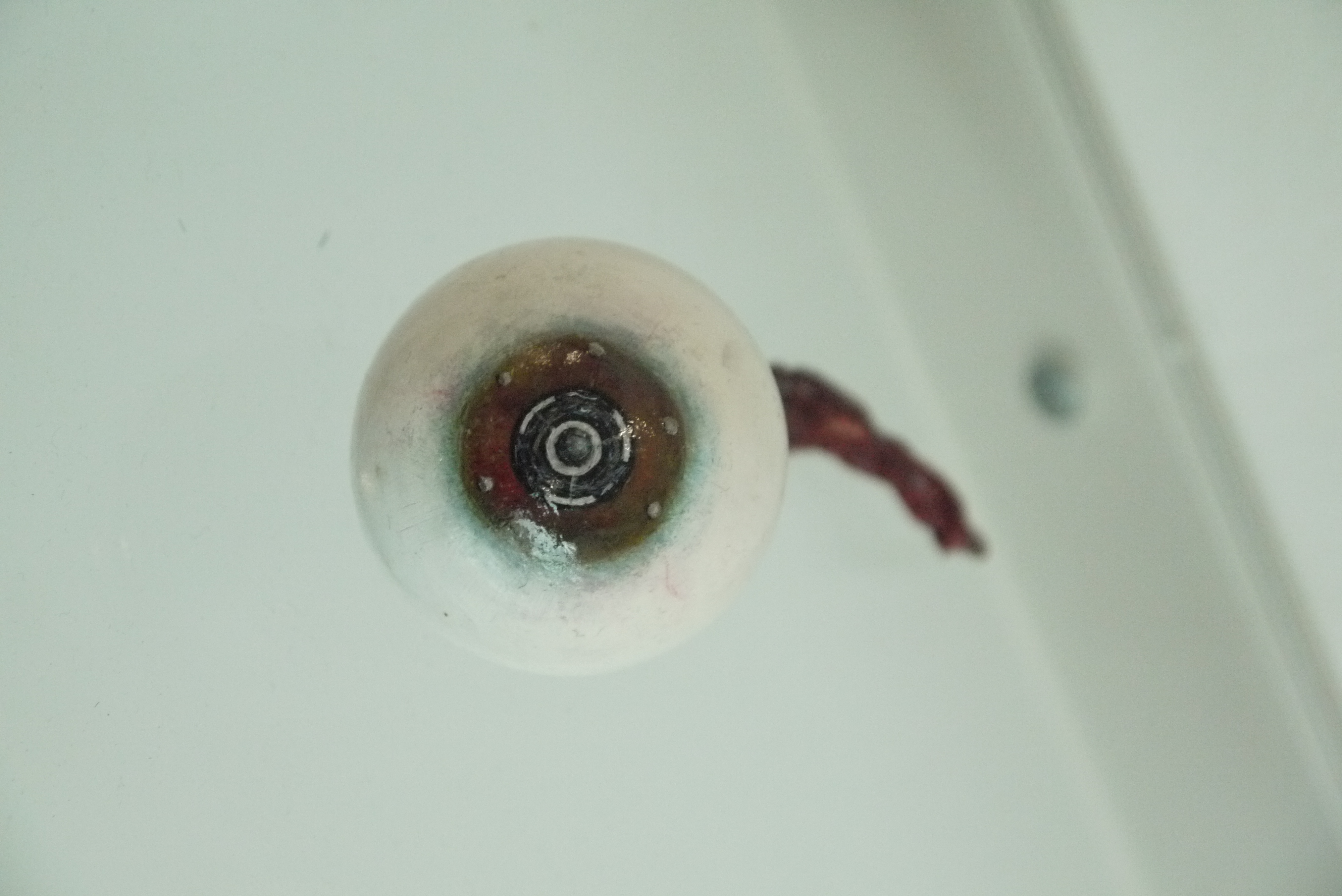
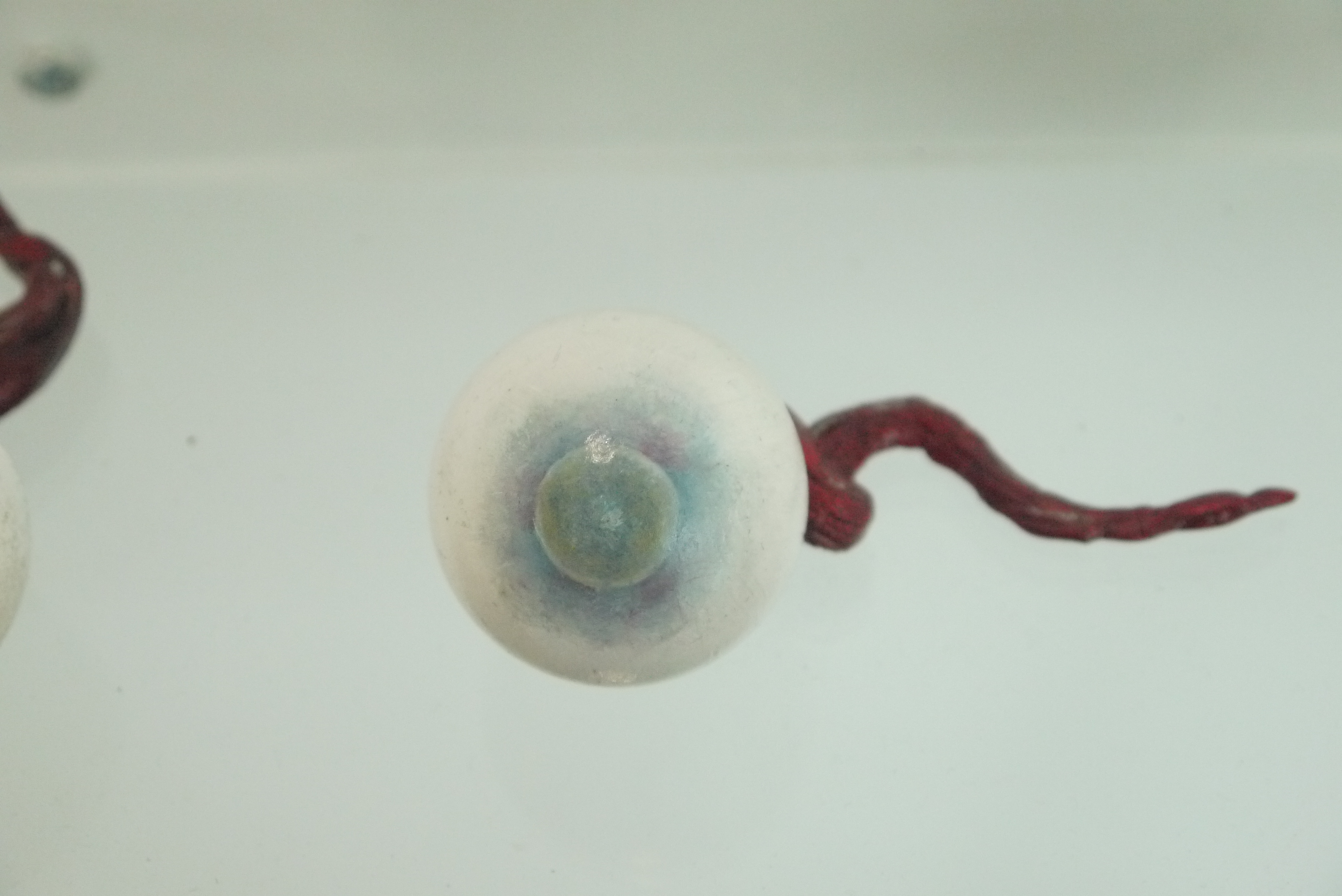
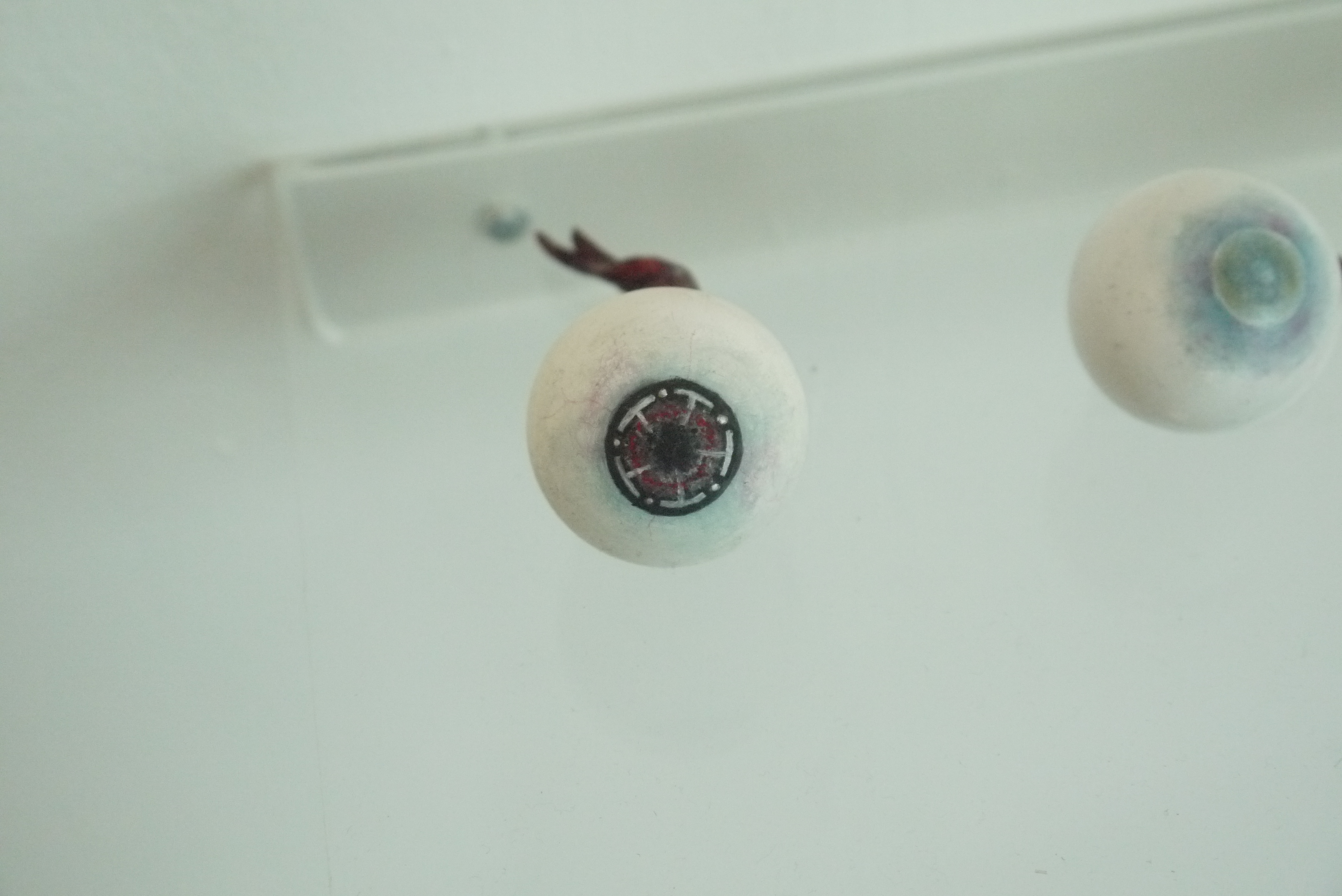
During the infancy on Biovision’s tyrannical existence, they specialised in human advancements such as the ocular replacements you see here. They were designed to improve vision as well as provide additional functions as per the costumer’s request. The
potential for this technology was never truly realised, as the company differed in its motives
throughout their development. The began testing what human could survive instead of
benefitting humanity’s chance of survival. One of the higher value specimens recovered originally belonged to The Director herself, who was assassinated by the rebel forces shortly before they won the war.

12
The Director
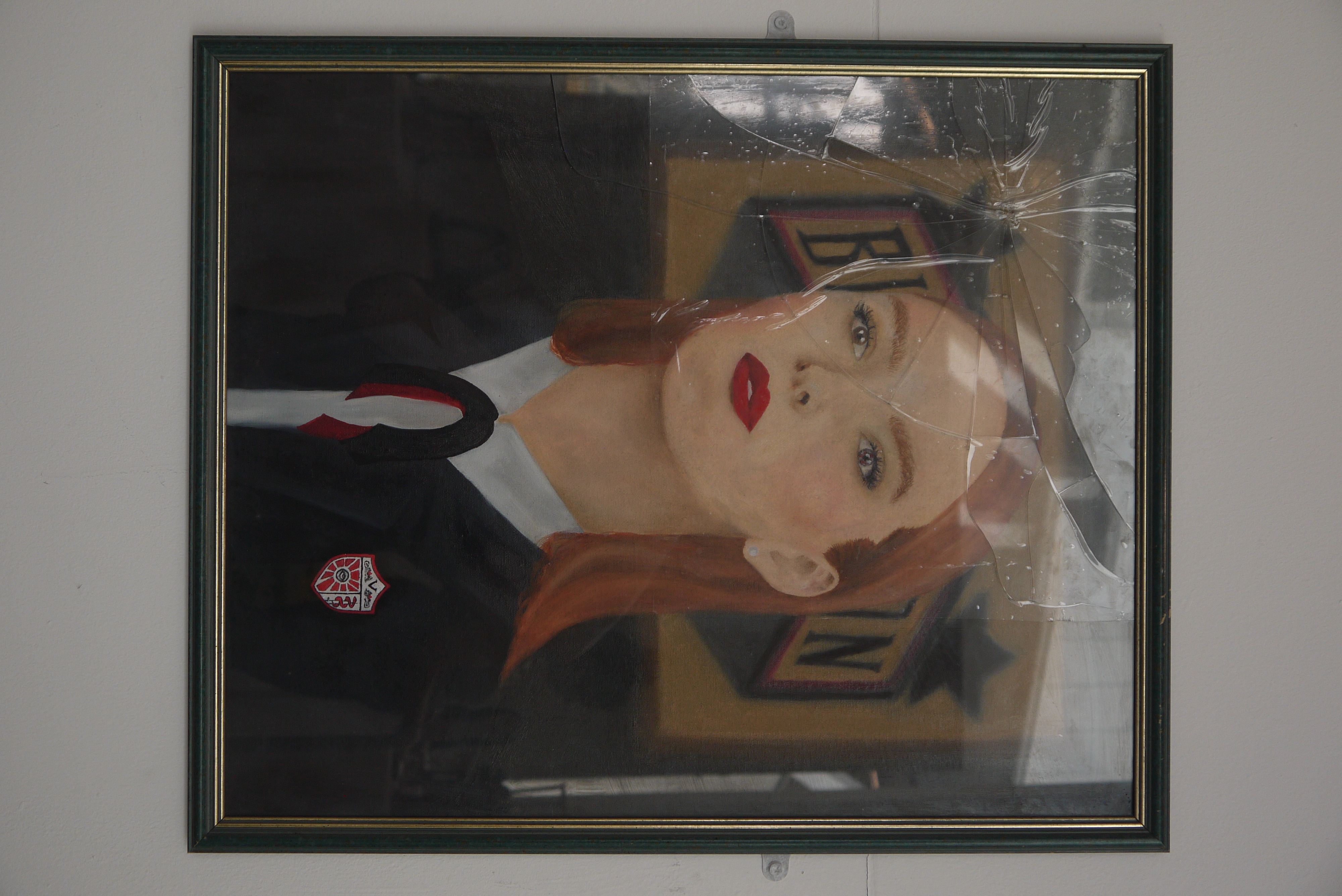
This painting was recovered from the office of The Director who was assassinated by undercover rebel operatives who infiltrated the Biovision building disguised as Monitorials.
The painting depicts The Director herself dressed in formal wear adorned with the Biovision crest. It was found after the war, where it had been destroyed by the rebels who assassinated her shortly before their victory. It was restored after the war for display purposes and despite its damaged state, The Director’s face is still visible, so she can be
identified as the person responsible for the crimes of the company before and during the conflict.
Oil on Canvas board

13
Banner
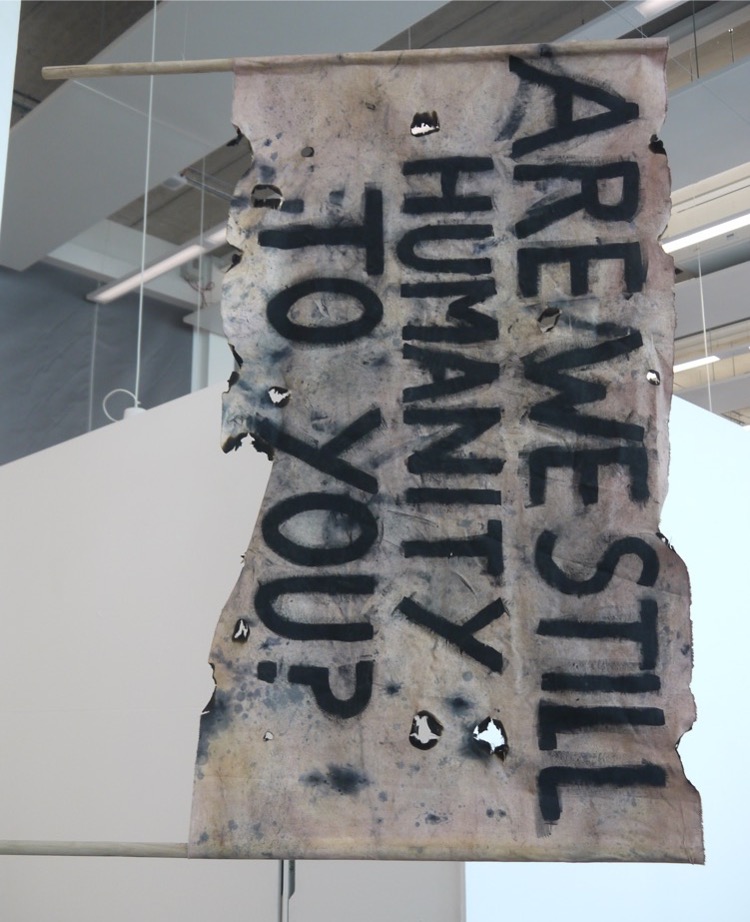
“ARE WE STILL HUMAN TO YOU?” – This item was recovered from an ex-patient rehabilitation camp. It was crafted by the ex-patients of Biovision in attempt to bring attention to their circumstances in the time leading up to the conflict. Banners like these first appeared when the camps had amassed large groups of people, and protests began taking place at the foot of the Biovision building. Before then people who spoke out against the company were dealt with harshly by the Monitorial regiment.

14
Rebel Display

15
Archived Poster Scraps

16
Archived Posters

17
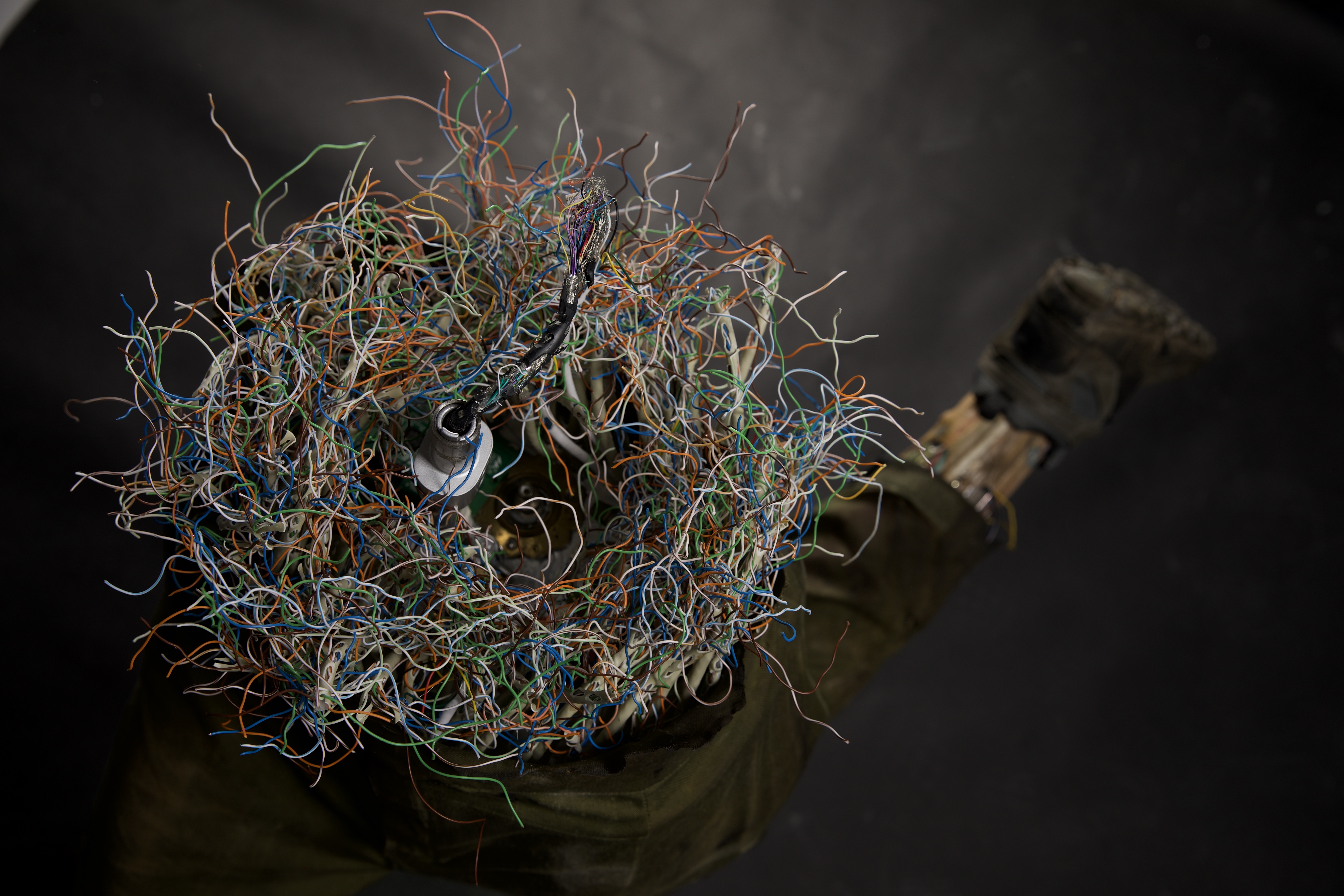
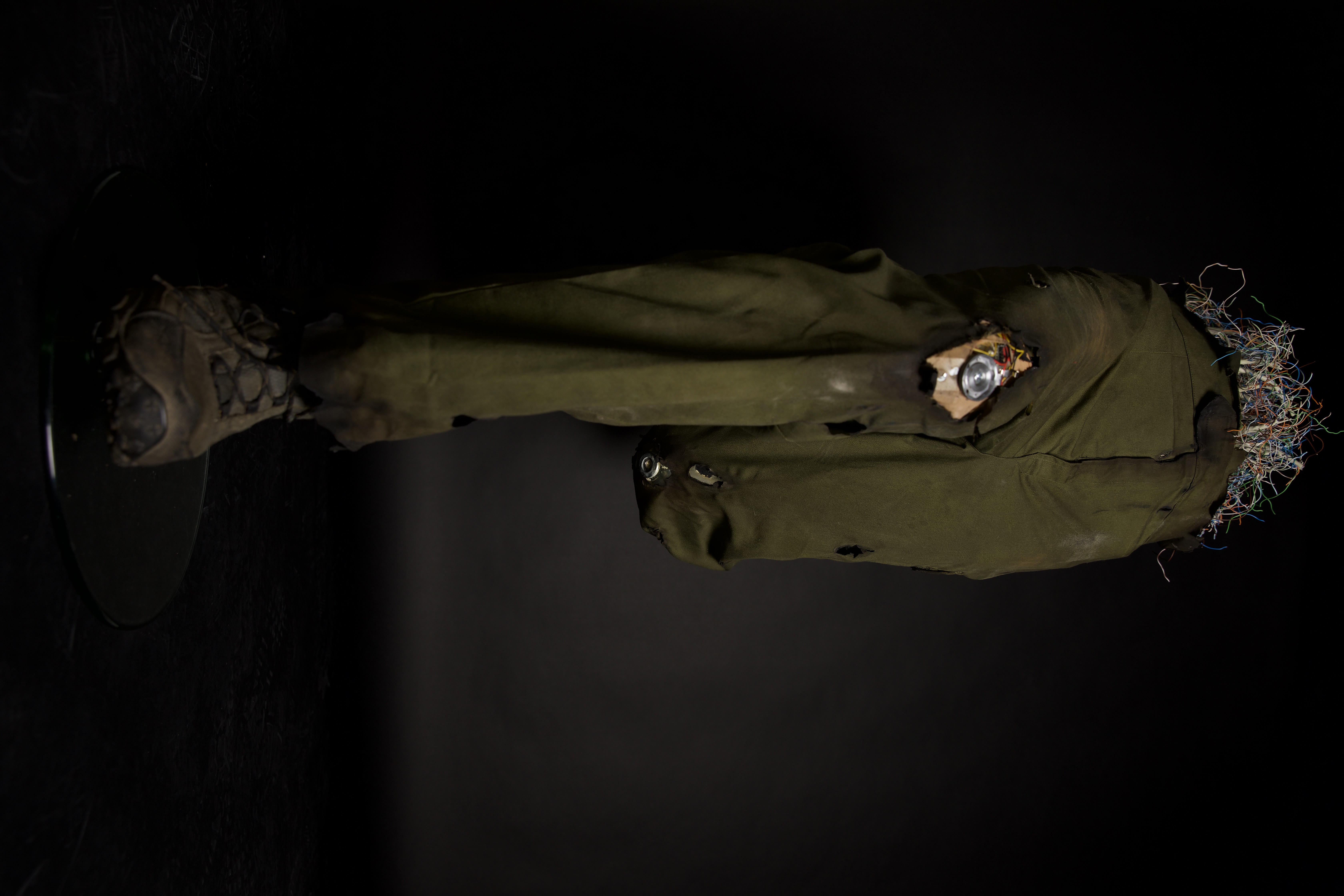
Monitorial Soldier Remains
Because of the vast ‘success’ of Biovision’s Monitorial procedures, they had acquired a large
company of mindless metal soldiers, which they used to fight the rising odds against them
during the war. Only the Monitorial regiment were fitted with neurological implants that
allowed for them to be controlled remotely by the company. The remains of this soldier
appear to be severed at the waist, preserved in their last active order transmitted through
their implant; to advance on the enemy. This specimen is so well preserved because they
were one of the few Monitorials to be almost completely overridden with Biovision
hardware, even going as far to replace the skin with a manufactured substitute. These
remains were found outside the remnants of the Biovision building after the war ended, but
it is believed that this particular specimen was killed closer to the beginning of the conflict.

18
Monitorial Soldier Remains
Detail

19
Monitorial Soldier Remains
Detail

bottom of page